Showing posts with label Special collections. Show all posts

Tuesday, 1 October 2024

Na to hoa aroha = From your dear friend : the correspondence between Sir Apirana Ngata and Sir Peter Buck, 1925-50

 From Tauranga City Library’s Archives and Special Collections

A monthly blog about interesting items in our collections.


The writing of history has its own history, its own significant works and notable published writers. Such books in public library collections can wear out, or just get lost. Older, fragile and sometimes rarer works that have been significant in the writing of New Zealand and Tauranga Moana history are kept apart in Te Ao Mārama - Tauranga City Libraries' Māori Special Books Collections - secure, cool and dry in a Climate Controlled Room. 

“Na to hoa aroha : from your dear friend” is one of these titles - a complete set of the three volumes is held, courtesy of the estate of Isla Nottingham.
They are an edited collection of the letters exchanged by Sir Apirana Ngata and Sir Peter Buck (Te Rangi Hiroa) during the years 1925-1950, which Sir Peter spent as a senior academic anthropologist at the Bernice Pauahi Bishop Museum in Hawai`i (eventually becoming its Director in 1936).

At that time letters were the main way of keeping in touch with friends and colleagues, particularly those abroad, and would cover a wide range of topics – politics, culture, family, professional work – with an immediacy and depth it would be hard to describe in formal historical writing or capture from newspaper articles.

For example, a lengthy letter from Sir Apirana Ngata to Buck of 17th December 1928 outlined the effects of the recent election in some detail. The Reform Party, led by his friend Gordon Coates, lost its large majority to the new United Party, which appointed Ngata Minister of Māori Affairs. This enabled him to press ahead with his ambitious scheme to enable Māori to farm their own land.

On 2 July that year Buck had updated Ngata on the progress of his ethnological work in the Pacific – writing up his researches on Samoan material culture and encouraging the creation of a Rarotongan dictionary. He also commented on the findings of the 1926-27 Sim Commission of Inquiry into the confiscation of Māori land under the 1863 New Zealand Settlements Act.

In a P.S. to that letter Buck says “At a meeting of the Academy of Science here, I stumbled across what to the scientists seems to be a new idea. I merely stated that Native Races did certain things because they liked doing it. This very abstruse statement has been very favourably discussed by the psychologists.” He thinks the idea (that indigenous people can make their own choices) may, after some dressing up, be launched by some academic authority as a proper theory.

Professor M. P. K. Sorrenson
Courtesy Auckland University Press

Professor M. P. K. Sorrenson's editing of the books is an example of traditional historical work – transcribing, editing and clarifying primary source material, then publishing it for others to use in their research, such as Dame Evelyn Stokes at the University of Waikato, who wrote extensively on Western Bay of Plenty history. Sorrenson's work, and the reporting of their lived experience by Sir Apirana Ngata and Sir Peter Buck, provide a foundation for us all to continue investigating and sharing how our world has been shaped by decisions and events in the past, an understanding enriched by books, articles, newspapers, photographs, maps and archival resources.
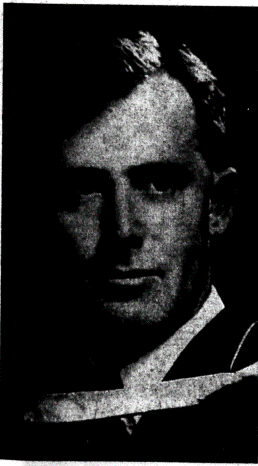


Bay of Plenty Times, 5 March 1963, Page 1

The rest of Sorrenson's career is outlined briefly on the Kōmako Website (“A bibliography of writing by Māori in English"). Years of teaching and research at the University of Auckland were combined with positions at the Historic Places Trust, Waitangi Tribunal and Geographic Board.
In 1997, the year after he retired from the University, the New Zealand Journal of History published an issue of articles by colleagues and students inspired by his work (called a festschrift), concluding with a bibliography of all his publications up to that point ( he has continued to publish).

Dame Evelyn Stokes contributed the article ‘Pai Mārire and Raupatu at Tauranga 1864–1867’ (New Zealand Journal of History, Volume 31, Number 1, April 1997 pp. 58-84). 

Such work continues to this day, as with a recent Master’s thesis for the University of Waikato by Elisha Rolleston, “Tūtereinga o Pirirākau: He piringa rākau, he piringa whakairo, he piringa whare, he piringa mana Māori Motuhake : Reclaiming identity and mana Māori Motuhake”. In it he “explores the role that the Tūtereinga whare whakairo has contributed towards the reclamation of the identity and mana Māori motuhake for Pirirākau” – one of the hapū discussed in Stokes’ 1997 article. 

Sources:


Tuesday, 2 April 2024

Anthony Trollope in New Zealand

From Tauranga City Library’s archives

A monthly blog about interesting items in our collections.

Anthony Trollope (1815-1882) rivalled his contemporary Charles Dickens for popularity and success as a novelist in Victorian Great Britain. First published in 1847 he was prolific, particularly given that for many years he was also a senior official at the Post Office. Trollope and Dickens wrote novels that were sensitive to the social structures of their age, sometimes with very similar themes, such as the injustices of the British legal system. Trollope became another favourite of BBC television’s costume drama producers - readers of a certain age may remember The Pallisers, The Barchester Chronicles or The Way We Live Now.


Trollope travelled widely outside Britain, both with the Post Office and after he resigned in 1867. His second son emigrated to New South Wales to run sheep; Mr. and Mrs. Trollope travelled to visit him in 1872 and spent some time in New Zealand on their way home.


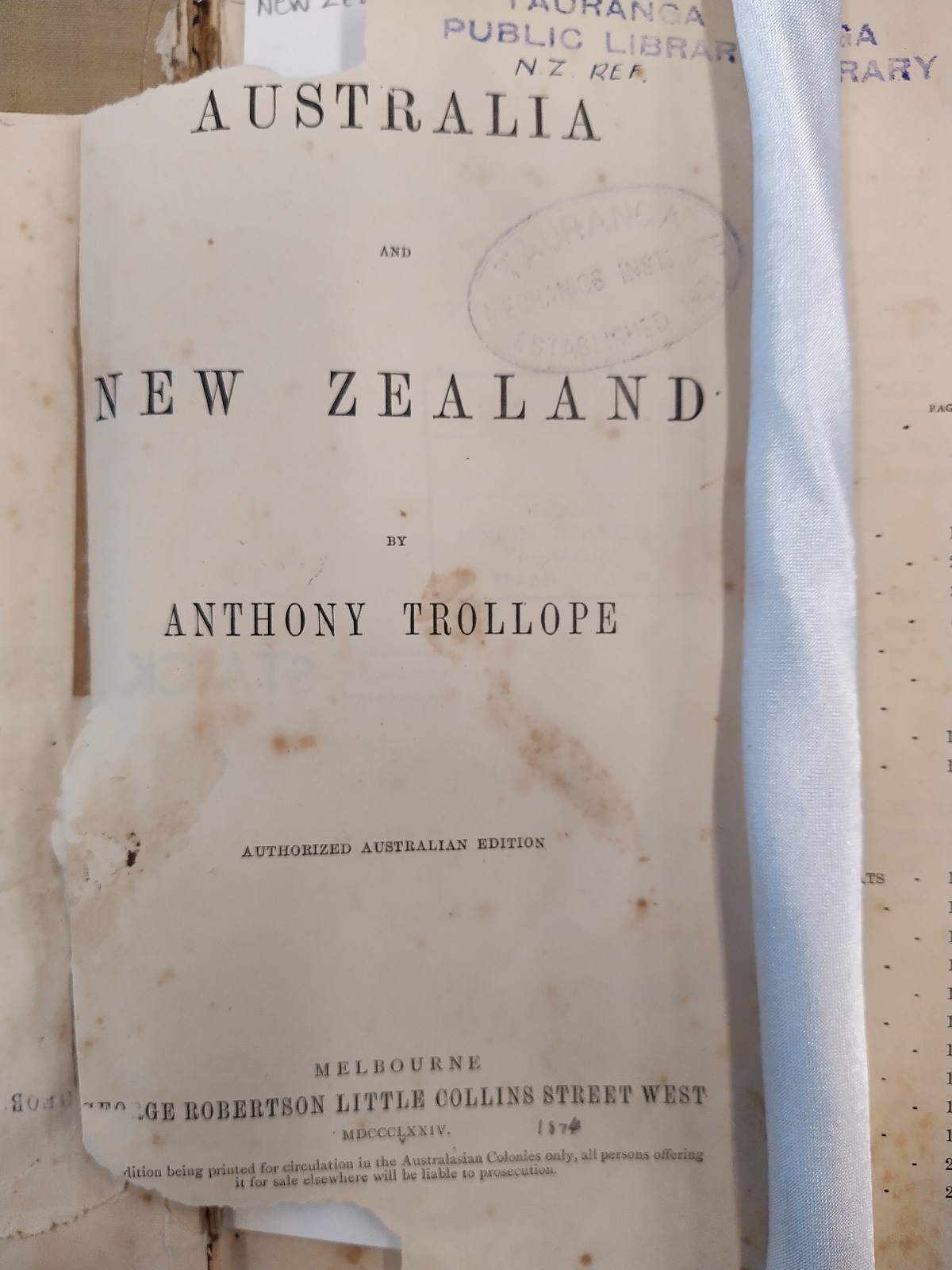
Of course, he wrote a book about the journey – Tauranga Libraries’ Special Books Collection has a copy of Australia and New Zealand, an edition published in 1874 especially for the Australia and New Zealand market. It may be one of the library’s oldest continuous holdings, since it was bought for our predecessor, the Tauranga Mechanics’ Institute (their stamp is faintly visible on the title page).


The photographs hopefully make obvious how well-used the book has been – it is barely holding together, despite being partly rebound, with the front and back boards’ corners worn to a round and tears in the “front matter” - endpapers and title page.


The library’s Sladden Collection has a copy of a London edition of the New Zealand chapters, separately published in 1874. It is in much better condition, only having one reader in its lifetime.


The text can be read in the University of Auckland's Early New Zealand Books online collection.
A 2022 article by Malcolm McKinnon in the New Zealand Journal of Public History, ‘Extended by iron ruthlessness’: Anthony Trollope, the Waikato war, and empire in the teaching of New Zealand history and international relations (Volume 8, Page 75) opens with an extract from one of Trollope’s observations about recent events in New Zealand.


“The acquisition of the Valley of the Waikato, which contains excellent land, was a great thing done. The natives by the treaty of Waitangi, had been declared to be owners of the land, – and the difficulty of buying land from them was great. There was trouble in getting it from them unfairly; – more trouble in getting it fairly. But acquisition by war settled all this” (Chapter LXIII, page 652).

Trollope’s blunt views on the outcome of fighting in the Colony during the 1860s were not shared by everyone in Britain and New Zealand – McKinnon reports others that were far more critical, then and later. Even Trollope’s views are shaded differently across the New Zealand chapters. The wear on the library’s copy suggests the interest its readers had in Trollope’s opinions during the town’s infancy. They may have been very influential on the way the members of a new and small settler community thought about their place in the world.

Sources: 

Encyclopædia Britannica. (n.d.). Anthony Trollope. Britannica Library. Retrieved October 24, 2023, from https://library-ebonline-co-nz.eztauranga.kotui.org.nz/levels/adults/article/Anthony-Trollope/73484.

Tuesday, 2 January 2024

A letter inside a book

From Tauranga City Library’s archives
A monthly blog about interesting items in our collection


It was a lovely surprise to recently discover a hand-written letter attached to the inside cover of a book in our Special Books Collection at Te Ao Mārama - Tauranga City Libraries. Donated to the library by then City Councillor A. Balfour in 1974, the significance of the letter is that its author is the notable historic figure Captain Gilbert Mair.  A surveyor, crown agent, and soldier, Mair is renowned for leading the No. 1 Arawa Flying Column in campaigns against Te Kooti (Crosby, 2004).

Captain Gilbert Mair, Carte-de-visite
Elms Foundation Image Collection 1972.0319

The recipient of the letter, Major V. J. (Vincent John) Scantlebury, was a Tauranga farmer and settler who at one time owned 500 acres in the area across from the Tauranga Racecourse, and who was once a Tauranga Borough Councillor (Scott, 2021).

Olive Scantlebury's inscription inside the book

In the letter, Mair first thanks Scantlebury for the loan of the book in which it was attached: The Mystery of Easter Island: the story of an expedition by Katherine Scoresby Routledge. First published in 1919, it is an account of her time on Rapa Nui (Easter Island) excavating moai (statues from Rapa Nui), collecting oral histories and studying the culture and lifestyle of the Kanaka people (Routledge, 1919). The publication is said to be a great authority on Rapa Nui at the time.  

The Mystery of Easter Island by Katherine Scoresby Routledge, and a page with her photo and autograph

Mair’s letter is dated 25th March 1923, and not long before this, Routledge and her husband were touring New Zealand. Mair, who had been a guide to many notable figures in Rotorua's districts, and to the famed author Anthony Trollope during his New Zealand travels, laments not having met the couple during their tour.  

Mair talks about his own fascination with Rapa Nui. He describes similarities among the Polynesian languages, and he feels that Māori must have traditional knowledge of that place.

Excerpt from Gilbert Mair's letter 

Mair also talks of his friend “Brookes” experience of helping to excavate two moai in 1868 and transporting them to England, as a lieutenant aboard the HMS Topaze. The ‘Hoa Hakananai’a’ and ‘Moai Hava’ are now exhibited at the British Museum and Manchester Museum respectively (British Museum, n.d.).

The moai Hoa Hakananai’a on the deck of HMS Topaze c. 1868,
from https://imaginarapanui.com/en/moai-hoa-hakananaia-the-stolen-friend-of-rapa-nui/
Mair was living with family friends, the Norris family at Rawhiti, 206 Devonport Road, at the top of 3rd Avenue (Green, 2022).  He mentions in the letter that he will leave the book for Scantlebury at Miss Norris’ shop as he is unable to walk too far. At this time he was not in good health, and died in the same year, in November 1923 (Crosby, 2004).

https://paperspast.natlib.govt.nz/newspapers/BOPT19231222.2.3

The extended Norris family outside their home Rawhiti in 1923, Tauranga City Libraries Photo 04-044
Even in his later years, Mair had maintained a curious mind, with this letter touching on, among other topics, his interest in languages, anthropology and botany.

Sources:

British Museum. (n.d). Moai. https://www.britishmuseum.org/about-us/british-museum-story/contested-objects-collection/moai 

Crosby, R. D. (2004). Gilbert Mair: Te Kooti's Nemesis. Reed Publishing NZ Ltd, Auckland. 

Green, J. (2022, July 15) Ebenezer Norris and Family (Part 2). https://taurangahistorical.blogspot.com/2022/07/ebenezer-norris-and-family-part-2.html  

Routledge, K. (1920). The Mystery of Easter Island: The Story of an Expedition. London: Hazell, Watson and Viney. 

Scott, R. C. (2021). Early Tauranga County History: Tauranga Suburbs to Pyes Pa Cemetery Including Greerton Township. The 100 Years Following Confiscation of the Land. (n.p.).

Tuesday, 6 June 2023

The books of James Thomson Wedderspoon

From Tauranga City Library’s archives
A monthly blog about interesting items in our collection

Tauranga Libraries’ Sladden Collection of older books contains at least 61 labelled as the Jim Wedderspoon Memorial Bequest. The only explicit record of how they got there is in an undated (1970s?), anonymous typescript about the Sladden, found in the Library’s Vertical Files. It says, “Another valuable donation of local material came from the family of James Wedderspoon”. 

Tauranga Historical Society had set up a special sub-committee to process the bequested Sladden and Wedderspoon books into a usable order. Its interim report, published in the Society’s Journal for September 1963, says “Both the Sladden and Wedderspoon bequests will be increased after a number of duplicates have been sold and the proceeds utilized for additional purchases. In the case of the Wedderspoon bequest, the increase will be substantial”. This suggests there was some overlap in the collections, and the 61 items are what’s left after the duplicates had been separated for sale. The books and pamphlets labelled as Wedderspoon are mostly formal Pākehā-authored publications on Māori history and artistic production.

Māori music, with its Polynesian background. Memoirs of the Polynesian Society, Volume 10.

The label from Ko Nga waiata Maori: he mea kohikohi mai (collected by Sir George Grey)

Who was Jim Wedderspoon? Using the genealogical and archival resources available in He Puna Wānanga at Tauranga City Libraries I believe we can identify him as James Thomson Wedderspoon (1900-1961), born in Scotland, the son of Alexander Carrick Wedderspoon (1864-1946) and Kate Todrich Thomson Wedderspoon (1877-1973).

Alexander C. Wedderspoon was a Presbyterian minister, who served in Tauranga from November 1909 to September 1917. Jim, and other members of the family, appear in several photographs from this period available in Pae Korokī – a wedding group, the Presbyterian church choir and a school photo. He is named in several Bay of Plenty Times articles – in April 1917 he was in the 38th Company Senior Cadets Team for the Imperial Challenge Shield Competition (Senior) for rifle-shooting.

Presbyterian Church choir c1915 - Jim is on the far left, his brother Carrick standing in front of his mother.
Tauranga City Libraries Photo 05-471 

After leaving Tauranga as a young man Jim appears to have been restless – moving regularly between Auckland, Dunedin, Christchurch and Tauranga, working at a freezing works, as a clerk, studying at Lincoln, and later working as a garage attendant. He appears in a Tauranga electoral roll in 1949 living in Devonport Road – he was at No. 154 when in 1952 he was an inaugural member of the Tauranga Historical Society.

He died on 6 December 1961. His Will left the whole of his estate to his married sister Ngaroma Nancie Ansell. Since she lived in Auckland it is possible that interested members of the Tauranga Historical Society offered to take his book collection, rather than the family having to carry it back with them. The books would be seen as complementary to the Sladden Collection.

Sources

  • Tauranga City Libraries' subscription to Ancestrylibrary - available free when at one of our branches 
  • Publications and images held at Tauranga City Libraries and on Pae Korokī.
  • Items in the Bay of Plenty Times found through PapersPast.
My thanks to Fiona Kean for advice and information, all observations are my own.