Showing posts with label Health. Show all posts

Friday, 17 July 2026

Vivien Edwards – a life to celebrate

 I went to the woods because I wished to live deliberately, to front only the essential facts of life, and see if I could not learn what it had to teach, and not, when I came to die, discover that I had not lived [1].

Photo: Beth Bowden

Those who come to this website for quality writing and research are always in good hands if the article that piques their interest is the creation of Viv Edwards, an occasional contributor since 2011.  Viv died on 9 June 2026.

Elsewhere on this site you can find her characteristically modest explanation for her self-taught skills in reporting the past: “History sparked my interest, after finding an old Hospital Board report on the 1918 influenza epidemic, while nursing at Auckland Hospital. This led to several articles, talks and researching other topics.” 

Vivien was always one for understatement.  Her output over her lifetime was prodigious.  She never seemed to stop working.  As a mature student, she graduated B. Sc in biological sciences, a disciplined achievement for the working mother, by that stage, of two sons.

Nurses graduation. Staff nurse V.S. Edwards, Tutor nurse E. Hereford (2/2). Published 29 September 1964. 
Te Ao Mārama - Tauranga City Libraries Photo gca-7396

Her first and early career as a nurse culminated when she became a nursing tutor.  Some of her alumni were at her memorial service, and spoke warmly of her abilities to communicate technical information in a way that never lost sight of the human dimension.  She adapted that to many different subject areas in her lifetime.

For instance: she was the author of "Winkelmann: Images of Early New Zealand" (Benton Ross, 1987) and "Battling the Big B: Hepatitis B in New Zealand" (Dunmore Publishing, 2007). The two books could not be more different.  The first is a beautiful art hardback in large format, dealing with nineteenth-century challenges of photography.  It met the technical challenges of twentieth-century book production so well, it won the 1988 Book of the Year prize in that category.  The second is a contemporary account of health reform efforts led by Dr Alexander Milne.  His work is much cited in on-line journals but it takes 27 Google search listings before Viv’s work shows up.  Hers is not a scientific report; it is an eye-witness story – a ‘first draft of history’ - of just how hard it was to deal with an unacknowledged epidemic [2].  

Book of the Year award, 1988. Photo courtesy of Trevor Hoff

After leaving nursing in 1984 Viv made her living as a freelance writer for over 20 years, working for trade and professional magazines such as NZ Forest Industries Magazine, NZGP (the periodical for general practitioners), Management, NZ Business, The Transportant, Pharmacy Today, Safeguard, Her Business, NZ Pine International, Sea Spray, Bits and Bytes, Uno (Waikato and Bay of Plenty), and the Shed.  Every article was clipped and meticulously filed - in scrapbooks; her early journalism pre-dated the World Wide Web although she was quick to see its benefits and adapted fast.

Blogs for Tauranga Historical covered things that caught her fancy.  You can search for her articles on -

  • Oliver Macy Quintal (July 2011).  Pursuing this early lawyer’s past took her and her partner Trevor to find his grave on Norfolk Island.
  • Hannibal Marks, Harbourmaster (July 2014).  One of the many maritime tragedies of Tauranga’s past: he drowned here.
  • Tauranga Hospital’s Roof Garden (Feb 2019).  Viv took the photos to illustrate this article.  Her eye for colour and form is evident.

She also wrote a personal memoir of her nursing days for the Historical Review [3].  A 50-year history booklet written for New Zealand Lumber, 'History in Motion: Evolution of the NZL Group 1949-1999”, was aptly named; history never stood still for her.

Perhaps her most telling achievement was the long effort to publish the story of Mary Sutherland, the first woman forestry graduate in the world. At some point in her magazine-article work she opened a long-ignored filing cabinet at the Forest Institute and discovered a trove of papers relating to Mary.  Although her memorial plaque is in Whakarewarewa Redwood Forest, Viv knew there was more to explore.

Viv and an as-yet unidentified companion at Mary Sutherland’s memorial, c. 2011. Photo courtesy of Trevor Hoff

For several years she researched and wrote Mary’s story.  A Path Through the Trees was published in 2020 and in 2021 won the Ian Wards Prize “for making substantial imaginative and exemplary use of New Zealand archives and records.”

This is a fitting accolade for Vivien’s professional competence.  She had advanced bibliographical skills; she was a capable indexer; she was also a warm and insightful interviewer whose personal communications gleaned information that otherwise would never have come to light.  Before the internet, before and during the advent of the personal computer, she had a knack for the research process and collecting and managing large amounts of information.

She was also a tiger for the truth, who doggedly pursued her hunches.  Mary Sutherland first saw the light of print in 2011, as an entry in the Tauranga Library’s 2011 Memoir and Local History Competition.   If Trees could Talk: the Whakarewarewa Redwoods was the title of the essay [4].  It was to be a long time before the book itself showed up. For this and all these other reasons, Tauranga Historical can be very proud of her.

References

[1] David Thoreau, Walden; or Life in the Woods, Ticknor and Fields,1854. At the memorial service my eulogy concluded with a fuller passage from this work, which can be found at https://www.environmentandsociety.org/mml/walden-or-life-woods

[2] The book is now out of print but can still be borrowed from Te Whatu Ora’s library in Tauranga.

[3] Historical Review, Vol 70, No. 1, May 2022: Vivien Edwards, Nursing at Tauranga in the 1960s

[4] https://paekoroki.tauranga.govt.nz/nodes/view/20049

Friday, 23 June 2023

Art Deco on Edgecumbe Road: Dorothy Willis, an Enterprising Woman

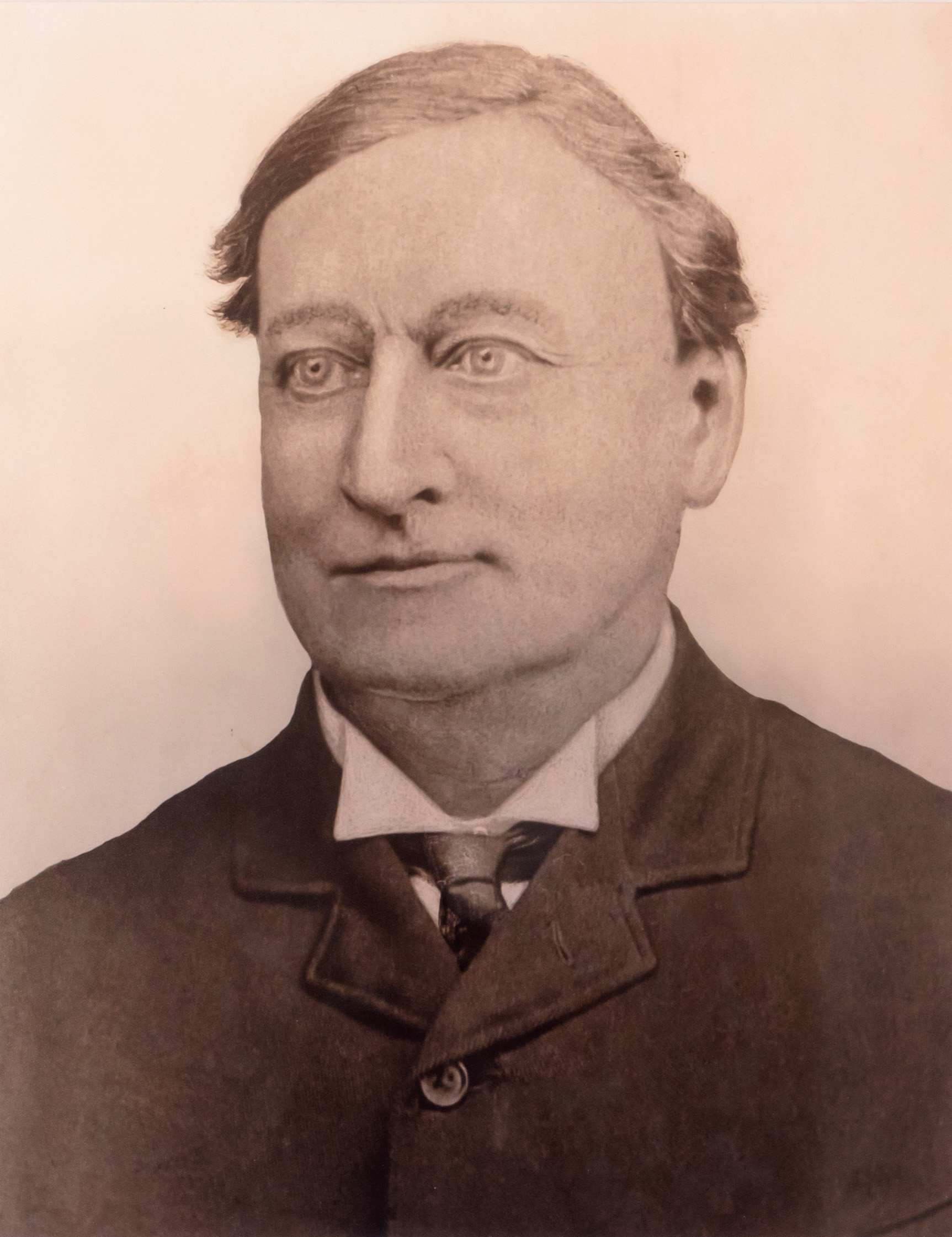
George H.A. Wills
Image courtesy of Tauranga City Library, Pae Korokī Ref. 04-563

While Mr George Wills and his wife Mary were living in Pendarves Street, New Plymouth they had their only child Dorothy Mary on 27 February 1911. George taught at the New Plymouth Boys’ High School at the time. The family moved to Tauranga and he taught at the District High School, then at Greerton Primary School.  George Wills became Head Teacher there from 1921 to 1944. [i]

The first show of enterprise by the seven-year-old Dorothy Wills, later to become a successful architect, was a fundraising effort with her friend Barbara Griffiths in aid of the Patriotic Fund in 1918. The two little girls put on a concert for their mother’s Bridge Club. [ii] During her school days she performed in plays and concerts, encouraged by her father who was himself active in amateur theatre in Tauranga.

Dorothy Willis, from The Free Lance, 30 Mar 1949

Dorothy was educated locally at Tauranga District High School where she successfully obtained the Junior and Senior National Scholarships. After two years at Epsom Girls Grammar School in Auckland she received a bursary, yet was still too young to enrol as a university student.

House at Edgecumbe Road, Tauranga designed by Dorothy for her father George Wills, c. 1936
Photograph by Shirley Arabin, 2023

After a year at home in Tauranga, Dorothy Wills was at last permitted to enrol in the degree of Bachelor of Architecture in 1929, and by 1933 had graduated and taken a position with Mr H L D West, a Tauranga architect. [iii] She was the second woman to graduate with this degree in New Zealand. Her thesis dealt with a modern private hospital of 120 beds. The degree also carried with it the Associate Membership of the Royal Institute of British Architects, [iv] and she became the second woman to register with that professional body.

It was during this period she designed an Art Deco-style house in Edgecumbe Road for her father. It is believed that the house has to date only had three owners, the second being the Mountfort family. Dorothy later worked for the Health Department on hospital projects. [v] In 1936 she left New Zealand to work in Britain, remaining there until 1949. [vi]

Dorothy Wills presented at court
Image from DigitalNZ

Dorothy led a busy social life in London, including being presented at Court in 1937. During the Second World War she worked for the War Office. She evaluated stately homes to assess their suitability to house scientists and other government employees, as they were generally stationed in the country, away from the dangers of the blitz. She also assessed bomb-damaged buildings for the Ministry of Works. She returned to New Zealand in 1949 to care for her aging father. [vii]
 
She moved to the Head Office of the Public Works Department in Wellington. While seconded to the Health Department, she helped Lady Freyberg, wife of the Governor General, to prepare Government House for the proposed visit of King George VI. They started a countrywide project to embroider thirty-eight tapestries of coats of arms of towns for the dining chairs to be used during the event at Government House.

Dorothy Wills married James (Jerry) Coulthard in 1957 and, promoted to Senior Architect, continued to work for the Public Works Department until 1969, after which she moved with her husband to Marlborough. In 1990 she was invited with the architect Michael Fowler to work on the restoration of Saint Mary’s Church, Blenheim. She died in 2007 and bequeathed a large sum to purchase public works of art for Marlborough. [viii]

References

[i] Kennedy, W J. (compiler) Greerton School Centennial Jubilee; souvenir history 1876 -1976.
[ii] Bay of Plenty Times, 23 Apr 1918
[iii] BOPT, 22 Oct 1933
[iv] BOPT, 13 Oct 1934
[v] Cox, Elizabeth (editor) Making Space; a history of New Zealand women in Architecture, 2022, p.50
[vi] Cox, p.60
[vii] Cox, p.103
[viii] Cox, p.104

Friday, 27 January 2023

Summer Heartbreak Remembered 120 years on


Boer War veterans with enteric fever return to New Zealand
The New Zealand Graphic and Ladies Journal, 22 September 1900
Auckland Libraries Heritage Collections, Ref. NZG-19000922-0544-01

“In January 1903, a great blow struck this little town when an epidemic of enteric fever swept through the district carrying off our baby sister, as well as dozens of other children. This might have been the aftermath of the Boer War – or caused by impure water supply but as we were still using individual tank or well water the latter could hardly be blamed. However, the community mourned this tragedy for a long time.”[i]

Historian Jinty Rorke once told me that she approached oral histories and personal reminiscences with a degree of caution, wary of incorrect facts and false memories obscuring events that had occurred years prior. Recently I was reminded of Jinty’s words when I came across this quote in a 1963 Tauranga Historical Society journal. Surely, dozens of Tauranga children dying of enteric fever over the course of a single month would be a well-remembered and sad chapter in our town’s history - even if it occurred more than 100 years ago.[ii] I knew I needed to investigate, especially as, in my experience, truth can dwell within the fallibility of memory.

Learning the name of the baby sister ‘carried off’ was my starting point. Fortunately, the writer, Mrs Rennie Gordon, provided a clue in the form of her maiden name - Daines.[iii]  A search of the Bay of Plenty Times produced this death notice: [iv]

The same edition of the paper also yielded information supporting Mrs Gordon’s account - an article which made it clear that Laura was one of several children who died of a ‘dysenteric complaint’ at the beginning of 1903:[v]


Laura is buried in the Catholic Cemetery with her parents Edward and Katie Daines. The first image was taken several years ago and the second is the current state. (Images courtesy of Fiona Kean, Private Collection & https://www.tauranga.govt.nz/council/services/cemeteries/cemeteries-search)

Further research produced the names of several children, amongst the pakeha population, who died of the ‘complaint’ in January 1903:

Edward Francis Castaing (aged 7 months)

Arthur Harold Jackson Smith (aged 4 years)

Robert (Roddie) Henry Smallbone (aged 5 years)

Frances (Fanny) Constance (aged 13 months)

Tom Eric Griffith (aged 4 months)

More deaths occurred in the ensuing months, and it seems likely the true number will never be known. [vi] However, the Department of Public Health Report for 1902-1903 documented that:

“Tauranga Borough has suffered, like Rotorua, from an outbreak of diarrhoea, especially among children; sixteen deaths occurring from this cause in six months. This, in a population of a thousand persons, shows an alarmingly high death rate.”[vii]

The deaths were not attributed to enteric fever but were believed to have been the result of summer diarrhoea - a worldwide phenomenon whose cause is still not fully understood:[viii]

“In January, February, and March 1903 an unusual number of cases of diarrhoea occurred in Tauranga and Rotorua, the illness being severe and of a dysenteric type … the sufferers were chiefly children and a number of deaths occurred in both places. Probably this is more of the nature of the summer diarrhoea commonly found in places where there is pollution of the soil by sewage, as this condition obtains in both Tauranga and Rotorua … In conclusion I would again draw attention to the necessity for placing acute diarrhoea on the list of notifiable diseases, since it is only by chance reports that serious outbreaks are discovered.”[ix]

At this point it would be natural to wonder what was done in Tauranga to combat the spread of the disease and to save lives. According to the Health Department’s report, very little: “Recommendations to the Council as to improvements in the night-soil service, and the protection of public wells, have not resulted in any action being taken.”[x] This is corroborated by a politically motivated letter to the editor written in April 1903. The writer, M. J. Stewart, asserts that Councillors were more concerned about keeping rates low than saving young lives:

“At the coming elections will the people of Tauranga, with whom the onus lies, return only men to the Council who will stop the sacrifice of little children to the Moloch of low rates and the party vote?[xi] It is deplorable that party should enter into a question of life and death at all, but it is a plain fact that one side stands for the Rights of Man and one for the Rights of Property, and there is no sign that those in the latter, who run the Council, have any conception that on their heads is the responsibility for the Massacre of the Innocents by municipal neglect of plain duty. It is deeply to be hoped that the sufferers will only choose Councillors of a stamp to whom sanitation and not cheapness will be the first object.”[xii]

Laura’s death had a significant impact on her older sister Rennie, who never forgot about her family’s loss, or the losses suffered by other Tauranga families in the summer of 1903. And although 60 years later all the facts of the tragedy might not have been at her disposal, the heartbreak she felt was. Rennie’s memories give us a glimpse of what she experienced and allow us to better understand how communities are changed - or not changed - by heartbreak such as this. Perhaps in one-hundred-and twenty-years’ time those looking back at the impact of coronavirus will turn to oral histories and personal reminiscences for the same reason.

References

[i] Mrs D.L. Gordon, ‘My Story – And Yours, Perhaps’, Journal of the Tauranga Historical Society, No.17, 1963.

[ii] Enteric fever or typhoid fever is caused by eating food or drinking fluid contaminated with Salmonella typhi bacteria. It can cause high temperatures, stomach pain, constipation, or diarrhoea.

[iii] Rennie Daines (b.1891) married Douglas Gordon in December 1946. Rennie was a well-known teacher and local identity.

[iv] Bay of Plenty Times, Volume XXXI, Issue 4405, 2 February 1903.

[v] Bay of Plenty Times, Volume XXXI, Issue 4405, 2 February 1903.

[vi] Percy Edward Wayte (aged 11 months), Susan McDowell (aged 2 years 11 months), Christina Victoria (aged 1 year 9 months), Madge Haliday (aged 5 years), Henry Tanner (aged 2 years 10 months).

[vii] Department of Public Health (Report of the), By the Chief Health Officer, Appendix to the Journals of the House of Representatives, 1903 Session I, H-31, (page 25).

[viii] For more information on summer diarrhoea see ‘The phenomenon of summer diarrhea [sic] and its waning, 1910-1930’ by American academics Anderson, Rees and Wang www.ncbi.nlm.nih.gov/pmc/articles/PMC8112734/ 

[ix] Department of Public Health (Report of The), By the Chief Health Officer, Appendix to the Journals of the House of Representatives, 1903 Session I, H-31, (page 9-10).

[x] Department of Public Health (Report of The), By the Chief Health Officer, Appendix to the Journals of the House of Representatives, 1903 Session I, H-31, (page 25).

[xi] “A Canaanite deity associated in biblical sources with the practice of child sacrifice” – Britannica.

[xii] Bay of Plenty Times, Volume XXXI, Issue 4436, 17 April 1903.


Friday, 27 May 2022

At Least Fifty Ways to Use a Bandage

I find it interesting to explore the many ways in which an object can be viewed and interpreted. What captures my imagination may not be the same for you, and as a curator it’s important to think about what you might like to know.

Triangular first aid bandage. Image courtesy of Tauranga Heritage Collection, 2692/84

Take this triangular bandage for example, one of three slightly different models we have in the Tauranga Heritage Collection https://view.taurangaheritagecollection.co.nz/objects?query=triangular+bandage. Would you be interested to know its age, where it comes from or how it was used? [i] Would you expect an account of the history of triangular bandages or perhaps the graphic illustrations have caught your eye? They show the many ways a bandage can be applied in an emergency and guarantee that the instructions are never lost. Maybe you want to understand when instructions were first printed on bandages and who came up with the idea. [ii]

A close-up of graphics printed on the bandage. Image courtesy of Tauranga Heritage Collection, 2692/84

For my part, I wonder how this bandage might be exhibited? Would the focus of the exhibition be sport, health or a terrible disaster and perhaps, most importantly, what local story can it tell?

George Vesey Stewart, first Mayor of Tauranga in 1882. Image courtesy of Tauranga City Council

Through the writing of George Vesey Stewart, the town’s first Mayor, we learn that Tauranga has the distinction of having proposed the earliest establishment of a St John Ambulance Corps in New Zealand. On a business trip to England in 1885 Stewart wrote a column in the Bay of Plenty Times in which he not only promoted the association but spoke of triangular bandages being sent to Tauranga [iii]:

“My sister-in-law, Mrs Gulson, who is a District Honorary Secretary to the above charitable institution, is sending you out some useful publications issued by the Society, with diagrams on linen showing the various modes of bandage or extempore mode of relief to be applied to patients who may meet with accidents till medical assistance can be obtained. I would suggest that you leave this parcel at the Mechanics’ Institute … Mrs Gulson will ascertain whether a branch could not be started in Tauranga, with assistance from the parent society in London.”

A view of Harington Street showing the one-story timber Public Library building, formerly the Mechanics Institute, 1926
Image courtesy of Tauranga Heritage Collection, 0606/08

The Mechanics Institute, located in Harington Street, was the centre of knowledge and learning in Tauranga and, in the absence of a public hospital, was viewed as a suitable place to house a bandage like this one, amongst the books and museum objects. So, in a way, this bandage has come full circle.


[i] Dr. Mathias Mayor is credited with ‘inventing’ the triangular bandage in 1831.

[ii] Printing instructions on a bandage was the idea of German Friedrich Esmarch who popularized its usage and is often mistaken as its inventor. He is credited as being the founder of modern first aid.

[iii] Tauranga 1882-1982