Showing posts with label Maketu. Show all posts

Friday, 26 July 2024

A Tauranga Fisherman - Captain Gilbert Mair and the Rurima Islands

Tauranga’s offshore fishermen once experienced record catches off a little-known group of rocks located near Matata. Known as the Rurima Islands or Rurima Rocks, they are located approximately 9 km (5.6 miles) west of Moutohora Island and 10 km (6.2 miles) northwest from the mouth of the Rangitaiki River. Rurima is the largest, with the smaller two being Moutoki and Tokata Islands. These uninhabited islands once supported large numbers of land and sea birds, tuatara and native rats.1 


Map showing the locations of some of the Bay of Plenty’s offshore islands including the Rurimas

The first European known to have fished the Rurimas was Captain Gilbert Mair NZC, who is best known for his military achievements during the Anglo-Maori Land Wars (1860-1872). He participated in the Waikato War, the East Coast anti-Hauhau campaigns, the Tauranga Wars of 1864 and 1867 and the pursuit of Te Kooti Arikirangi Te Turuki and the prophet-general’s Ringatu ‘rebel’ guerilla fighters (1870-1872). Given his leadership of colonial forces and the pro-government Maori Flying Column, as well as displays of personal courage in numerous actions, Mair’s NZ Military Cross was hard earned and richly deserved.


Captain Mair (far left) with his Arawa Flying Column in July 1870 at Rotorua’s Lake Rotokakahi (Green Lake)

Captain Mair was also an avid fisherman when off duty. Often based at Tauranga during his military duties during the 1860s, and civil duties in the Tauranga Magistrates’ Court during the 1870s, the veteran was able to indulge his passion. During offshore excursions, Mair was at the tiller, steering the 35-foot whaleboat he kept at Tauranga. The 2-ton craft was powered by sails and six Maori and/or Pakeha oarsmen-fisherman who regularly shared their record catches from the Rurimas with Tauranga Moana’s local iwi. In 1873, Mair took his whaleboat out to Karewa Island off the Tauranga Harbour entrance to collect tuatara for the British Museum.3


Mair with a dinghy load of dogfish

Fluent in Maori and with successive Maori wives and relatives, Mair acquired a detailed knowledge of Maori fishing methods and locations in the Bay of Plenty, including its offshore islands. He put this knowledge to practical use in later years and the Rurima Islands off the settlement of Matata became a favourite location.

In 1872 Captain Mair took his whaleboat and six Tauranga oarsmen to the islands on a fishing excursion and reported:

In four or five fathoms water, with six lines, we had a whale-boat half full in an hour. The first fish hauled in were followed to the surface by swarms of snapper, kahawai, kingfish, barracoota and maomao, and then we simply bobbed for them as you would for minnows in a brook until my arms ached with the exertion of lifting them over the boat's side.4


At nearby Maketu in 1885, Mair witnessed the remarkable hauling in of a great fishing net, 95 chains in length (1.1875 miles), constructed and deployed by the Arawa people.


The fish caught consisted mainly of kahawai, schnapper, trevalley, gurnard, moki, tarakihi, parore, kingfish, tutahuna, kapeta, pepeke, mangopare, mangotara (several kinds of smaller shark), the latter a small blue shark, much prized for its fine oil, also about twenty "takiari," which attains a length of 12 to 14 feet, and has been known to attack swimming horses, cattle, dogs, and human beings. There were also uncounted numbers of smaller fish, such as koheriheri, or koheru (horse mackerel), kutorotoro (sand fish), and some new species.5

The Rurima Islands with Moutohora Island beyond

Born in 1843, Mair retained his lifelong enthusiasm for fishing. Just eighteen months before his death at the age of 80 at Tauranga in 1923, a visitor to the town’s waterfront reported how he saw there a man who:

[C]hip, chip, chipped at the paint on a dinghy hull. He was of medium height, well built, and had the smooth cheek and freshness of complexion of a boy. His movements were decisive, and vigorous, and in judging his age one would have hazarded fifty years at the outside.

Yet it was Captain Gilbert Mair, over eighty years of age, enjoying himself in helping to get back into commission his friend’s fishing dinghy. That is more than eighteen months ago at Tauranga, and … I tried to link him up with his fighting days.

Captain Gilbert Mair straightened his back … and instead ‘of hair-breadth scapes in the imminent deadly breach’, he gave me office stories of the days when he worked in the Government Lands Department.6

The Rurima Islands as seen from above Whakatane

Today, the Rurima islands are an uninhabited nature reserve owned by the Ngati Awa iwi, and Moutoki Island remains an outpost for tuatara. ‘The Rocks’ continue to hold fish all year round but, while good catches can still be made in shallow water with the help of burley, the great shoals of Rurima’s golden age of fishing are long gone. The islands are now best known for snorkeling, diving and kayaking.7 

Captain Gilbert Mair NZC. in 1921

The last words in this article belong to Captain Mair who in 1922, expressed a concern that many of Tauranga’s offshore fishermen share to this day:


Having resided in the Bay of Plenty off and on since 1864, and watched the countless shoals of fish which cover the sea from Mercury Bay to Cape Runaway in the spring for months, I perpetually wonder why our fish supply should be so precariously uncertain and expensive.8

References

1 Bay of Plenty Regional Council, https://www.boprc.govt.nz/media/796325/islands-karewa-tuhua-mayor-moutoki-rurima-motunau-plate-motuhora-whale-motuhaku-schooner-rock.pdf

2 Mair, Gilbert – Dictionary of New Zealand Biography, Te Ara, https://teara.govt.nz/en/biographies/1m4/mair-gilbert


3
Tinne, Ernest J; The Wonderland of the Antipodes, Sampson Low, Marston, Low, and Searle, London, 1873: 84.


4 Mair, Gilbert, Notes on Rurima Rocks. Transactions and Proceedings of the Royal Society of New Zealand, 1872: 151. 


5 Mair, Captain Gilbert, Reminiscences and Maori Stories, Brett, Auckland, 1923: 22.

6 Manawatu Standard, 3 December 1923: 5.

7 Bay Of Plenty Regional Council, https://www.boprc.govt.nz/media/796325/islands-karewa-tuhua-mayor-moutoki-rurima-motunau-plate-motuhora-whale-motuhaku-schooner-rock.pdf

8 Mair, 1923: 22.

Illustrations

Bay of Plenty map,  SunLive https://www.sunlive.co.nz/news/281986-all-safe-following-capsize-near-rurima-island.html

Mundy, Daniel Louis, Captain Gilbert Mair and his Arawa Flying Column at Kaiteriria Pā and camp, Rotokakahi, Ref: Mundy Album No 2, PH-ALB-86-p93-1. Auckland Museum, Auckland, New Zealand. https://www.aucklandmuseum.com/collection/object/am_library-photography-14314

Photographer unknown. Gilbert Mair in a rowboat, Whangarei. Ref: PAColl-7985-85. Alexander Turnbull Library, Wellington, New Zealand. https://natlib.govt.nz/records/22335614

Photographer unknown, Rurima Islands, Wai 46 # A3, Te Rangahau Whenua Raupatu O Ngati Awa Report to Department of Conservation, 25 July 1992: 15.

Photograph by ‘Avenue’. Rurima Island and the rest of the Rurima Rocks viewed from Kaputerangi Pa above Whakatane, 19 November 2009, CC. Wikipedia Commons. https://commons.wikimedia.org/wiki/File:Rurima_Rocks_zoom.jpg

Mair, Captain Gilbert, Reminiscences and Maori Stories, Brett, Auckland, 1923: 3

Friday, 17 November 2023

Edward Clementson, Castaway and Flax Agent, 1833-1838

Tauranga’s Early Traders Part IV
 

Like the South Shields collier Mary shown here in two views, Clementson’s vessels Elizabeth and Bee were British built brigs – vessels generally defined as square sailed, 2 masted vessels, often with one or more try sails between foremast and bowsprit and a fore-and-aft spanker boom sail off the main mast.

Edward Clementson enters New Zealand history in 1830 as a 23-year-old ship’s mate on Captain John Stewart’s 236-ton English brig Elizabeth, which sailed from Sydney to New Zealand in search of a cargo of muka or dressed flax.1   In return for a promised shipload of this commodity, Stewart transported 100 of Te Rauparaha’s Ngati Toa warriors from Kapiti to Banks Peninsula. There, they surprised and slaughtered many Ngai Tahu people at Takapuneke and captured their leading rangatira Te Maiharanui and his wife. Both were later tortured and killed at Kapiti. The Elizabeth’s crew was reported by Ngai Tahu survivors to have actively participated in the attack. John Stewart was subsequently arrested and sent to trial in Sydney where the charges were dismissed. Although Clementson had led the party of three sailors who seized and chained Te Maiharanui and was described in NSW official documents as one of the two principal offenders, he was not prosecuted.2

By 1832, Edward Clementson was in command of the brig Bee, sharing with the first mate responsibilities for the deck crew, ship’s cargo and navigation. Despite its assorted crews and skippers (including Clementson), the 135-ton, square-rigged sealer-trader was sailed repeatedly and successfully between Hobart and New Zealand, and along the latter’s uncharted, unlighted, inshore “cannibal coast”, for more than 20 years.3

Between Abel Tasman’s visit in 1642 and the Treaty in 1840, Maori throughout New Zealand launched 111 recorded taua ito (blood vengeance) and taua muru (ritualised plundering) raids against ships, ships boats and shore parties, almost all retaliatory in accordance with tikanga Maori or customary law. Given these turbulent times, the Bee had a remarkably long period of service, particularly as most voyages were made during the Sealers War (1810-1822) and the most intensive years of the intertribal Musket Wars (1818 -1839).4 

The journalist-historian James Cowan said of the Bee’s voyages during this era:

Under one owner and another, and a succession of hard-case skippers, this busy Bee knocked about New Zealand and its off-shore islands wherever there was a cargo of flax to be picked up from the Maoris in exchange for muskets and gunpowder, or a load of oil and bone from its shore-whalers, or a lot of skins from the seal-hunting gangs. In her spare time she went whaling, like many other South Sea traders of that day.5  

In 1833, a time served convict from Hobart town named William Cuthbert, also known as Lincoln Bill, managed to raise enough capital from creditors to charter the Bee and a cargo of “trade” intended for barter with coastal iwi. On boarding the vessel, he directed the Bee’s new captain, William Stewart to sail for New Zealand ostensibly ‘to trade for flax and pigs, oil and “general fixings”, which at that time included smoke-dried tattooed heads; trade term, “baked heads”.  Cuthbert first ordered Stewart to proceed to Tasmania’s Maria Island where he took aboard three escaped convicts from the penal settlement and their captive policeman escort.6     

William Stewart was a master mariner and navigator of some repute and Stewart Island is named after him. Clementson, who remained on the Bee in the role of first mate quarrelled with Cuthbert who planned to sail the brig to Peru where he hoped to sell the vessel and its cargo. In due course, the brig reached the New Zealand coast at Tauranga. Here, Cuthbert ordered Clementson ashore at pistol point on one of its beaches “with barely more than the clothes he wore”.7

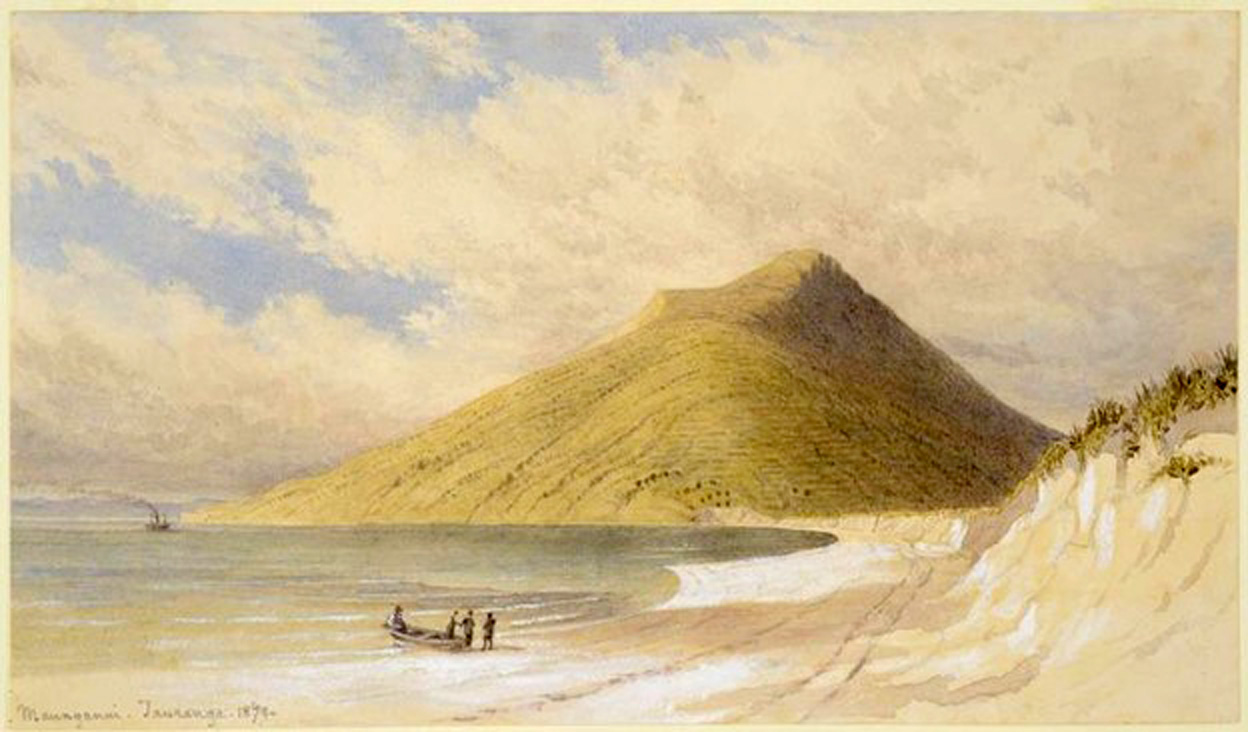
In 1833 Edward Clementson was abandoned on one of Tauranga’s beaches by the Bee’s piratical master William Cuthbert

The Bee’s crew set sail for the Pacific Islands where Cuthbert later dumped the police constable and the three Maria Island convicts. For some months, he and his crew, which mostly comprised time expired convicts like himself, commenced an island hopping, drunken debauch with Polynesian women from various islands between, and including, Tahiti and Hawaii, on their way to Peru. However at Honolulu Harbour, William Cuthbert disappeared, perhaps forewarned that the Sydney authorities had declared the brig a pirated vessel, though the Maketu based trader Phillip Tapsell was later informed that the pirate had been hanged.8 The Bee was eventually returned to Sydney and sold for the benefit of Cuthbert’s creditors.

There were no missionaries resident in Tauranga in 1833 and Clementson was fortunate not to have been captured by Ngapuhi or Te Arawa, whose allied waka fleets often entered the harbour and occupied its shores that year to make war on local iwi. Clementson found refuge among Ngai Te Rangi’s trader Pakeha-Maori at Otumoetai Pa, where he was soon recruited as a flax buying agent by the Maketu based trader Phillip Tapsell. Led by Tapsell, Clementson and several Maori guides set out from Maketu to Rotorua, then on to Matamata Pa, the base from which the castaway Englishman was to conduct his trade. The journey and reception at Matamata must have been a strange experience for Clementson, a veteran seaman recently turned landlubber. Tapsell told his biographer, the Maketu Postmaster, Mr E. Little in 1869:

For a part of the way our journey was very severe, over a succession of steep mountains, the sides of which were like precipices, and though the forest of Patatere [sic], which was so dense, and obstructed with undergrowth and supplejack, that our passage through it was toilsome beyond measure. Matamata was at that time a very beautiful place, and provisions of all kind very abundant, A great feast was prepared on the arrival of our party from Maketu. Pigs were killed and roasted, baskets of eels prepared, and stacks of potatoes sufficient for a hundred men; in addition to which a large number of live pigs were sent for our party to kill for ourselves.9 

When Tapsell had negotiated terms of trade with Te Waharoa and other leading rangatira, he and his guides returned to Maketu, leaving Clementson among Matamata’s Ngati Haua people.10   

Tapsell had already placed traders at Matamata Pa to exchange muskets, munitions and general trade goods for dressed flax. Appointed chief trading agent by Tapsell, Clementson appears to have been readily accepted by his fellows, while he adopted their Pakeha-Maori lifestyle and became fluent in Maori. When the Anglican missionaries Williams, Fairburn, Brown and Morgan ascended the Waihou for the first time in 1833, they were welcomed at Matamata by Te Waharoa. Williams noted that Ngati Haua’s traders were "very civil" Nevertheless, that evening when the missionaries and their christianised Maori porters commenced a hymn, Clementson and his three companions countered from within their whare with a voluminous version of Old King Cole.11

This sketch by Henry Williams of missionaries crossing a swamp is based on his arduous traverse of the Matamata’s great Mangapouri swamp with Revs Fairburn, Brown and Morgan in 1833. The same swamp was traversed by Clementson’s great cross-Kaimai flax trains from 1833.

As arranged by Tapsell and Te Waharoa, for the next several years Clementson's consignments of flax were back packed or pikaued through the great korari or flax swamp known as Mangapouri (Dark Stream) and across the Waihou River, seperating Matamata and the Kaimai Range. They were then laboriously transported up the 1,600-foot range by long lines of women, older children and slaves who camped overnight on the broad summit plateau. Descending the ancient and deeply rutted Wairere track the following day, the porters crossed the Te Puna Peninsula to the Wairoa River mouth. There, they were met by the Otumoetai based Farrow brothers who supervised the consignments’ loading aboard vessels bound for Bay of Islands and those contracted to the Sydney merchant Richard Jones.

While Clementson’s consignments were intermittent, they were considerable. In a letter written to Henry Williams in on 11 September 1835, Alfred Brown who was visiting Tauranga reported: "Mr Clementson is just going to transport upwards of fifty tons of flax to Tauranga in two thousand back-loads. All this has been scraped by the natives since I have been here".12

A trader bartering with Maori for baskets of dressed flax and a pig during the 1830s

Despite his actions during the Elizabeth affair, Clementson established and remained on good terms with Tapsell, his fellow traders at Matamata Pa and the Bay of Islands missionaries during their temporary visits to Tauranga between 1833 and 1838. When Clementson learned that Te Waharoa was planning to attack Maketu Pa in early 1836, he twice sent one of his traders to warn Tapsell.13 When Rev John Wilson visited Tauranga on the little missionary cutter Kukupa in 1836, the year intertribal warfare in the region reached its apogee, Clementson sent him a bodyguard - a ferocious bull-dog cross, incongruously named Breezy.14  

Later that year, when Clementson and James Farrow visited the Bay of Islands, they joined the missionaries in supporting a petition to King William IV, by settlers, exasperated at the absence of law and order.15 Fortunately for Clementson, when he once cursed Te Waharoa “native fashion”, a curse associated with evil and death, a timely intervention by Alfred Brown saved his life. The utu (payment or compensation) demanded by Te Waharoa, and known to have been paid by Brown, while unstated, will have been substantial.16   


Te Waharoa died in 1838 and his Pakeha-Maori Edward Clementson, died soon after, during a voyage from Tauranga to Matata. His trader contemporary James Farrow who survived the voyage informed Phillip Tapsell:


       He [Farrow], his wife, Clementson and a young man named Jenkins had set out … with a view of meeting with Mr White [resident trader at Matata and later, a prolific boatbuilder], and when off the place, were overtaken by a gale of wind. It would have been easy for them to have run under the lee of Whale Island where they could have had smooth water, and there have waited till the storm subsided, but their young companion being inexperienced and very confident, was strongly desirous that they should at once land at Matata, which he was of the opinion they could easily do.


Yielding to this opinion, they pulled for the mainland, on approaching which, they found a very heavy surf breaking on the bar. Appearances were so threatening, that when near the entrance to the river, they laid on their oars to deliberate on the best course to pursue. They consulted so long that before they were aware, the boat drifted into the breakers and was capsized. Jenkins not being able to swim, went down like a shot. Clementson was a good swimmer, but was so encumbered by heavy boots and buttoned up to the throat with a pea jacket, that after a few strokes, he sank also.17  


James Farrow, who was also a good swimmer, almost succumbed to exhaustion, but encouraged by his Maori wife who swam by his side, he eventually reached the shore and safety.


References

1 NZ pre-1846, Person page 791, Early NZ history, nzearlyhistory.com, http://www.nzearlyhistory.com › p791 

2 Ogilvie, Gordon, Banks Peninsula, Cradle of Canterbury, GP Books, Wellington, 1990: 155. McNab, Robert, Historical Records of New Zealand, Vol. II, Government Printer, Wellington, 1914: 594.

3 Daily Southern Cross, 4 August 1869: 6. 

4 Bentley, Trevor, Pakeha Slaves, Maori Masters, New Holland, Auckland, 2019: 22-23, 25-26.

5 Cowan, James, ‘Rovers of the Brig “Bee’ – The Story of a Lawless Cruise in the Old Pacific’, in The New Zealand Railways Magazine, Vol. 13, Issue 3, 1938: 17-20.

6 Daily Southern Cross, 4 August 1869: 6. 

7 Auckland Star, 8 December 1928: 1. (Supplement). Cowan, JPS, Vol. 13: 18.

8 Daily Southern Cross, 4 August 1869: 6.

9 Ibid.

10 Ibid. 

11 Vennell, C.W; Brown and the Elms, D.H. Maxwell, Tauranga, 1984: 12.

12 Gifford, W.H. and H.B. Williams, A Centennial History of Tauranga, The Tauranga Centennial Committee and A.H. and A.W. Reed, Dunedin, 1940, Capper Reprint, 1976: 209.

13 Tapsell, P; ‘Reminiscences, 1777?-1873’. Ref. ½-005486, Alexander Turnbull Library, Wellington, NZ: 155-156.


14 Wilson, J.A; Missionary Life and Work in New Zealand, 1889: 56.


15 Polack, J.S; New Zealand, Vol II, Richard Bentley, London, 1838, Capper Reprint, 1974: 188.  


16 L.W. ‘Te Waharoa of NgatiHaua’, in The Journal of the Polynesian Society, Vol 71, No. 4 1962: 368.


17 Tapsell, P.  ‘Reminiscences’,155-156.


Illustrations

John Scott, The South Shields Collier Brig ‘Mary’ 1885, Wikipedia, https://en.wikipedia.org ›wiki › Brig

John Kinder, Mt Maunganui, Tauranga, 1874, 1937/15/46, Auckland Art Gallery, Toi O Tamaki.

Henry Williams, ‘Passing through a swamp in New Zealand’, PUBL-0031-1836-1. Alexander Turnbull library, Wellington, NZ.

John Williams, ‘A European male, thought to be Joel Polack bargaining with three Maori males’, [1845-1846]. A-079-017. Alexander Turnbull Library, Wellington, NZ>