Showing posts with label Pilot Bay. Show all posts

Friday, 13 February 2026

The Mount Maunganui Channel and the Wrecking of the Cutter Waterlily, 1873


Tauranga Harbour, its main entrance and outer waters witnessed the wreckings of many waka Māori, sailing ships and steamers, both large and small during the course of the 1800s.

The narrow Maunganui Channel particularly, with its outer southern reef, shifting winds, strong currents, rocky southern shore (under Mauao) and Stony Point Reef continued to claim vessels well into the 1900s.

In 1829, the Mount’s channel rocks almost wrecked the Australian whaling ship Vittoria. Fortunately, the whalers Guide and Prince of Denmark were also in the harbour seeking provisions from local iwi. The combined tools and efforts of all three crews repaired the Vittoria sufficiently for it to sail clear before the weather turned.[1]

Marked today by the statue of the sea god Tangaroa, the Maunganui Channel’s Stony Point Reef nearly claimed immigrant visionary George Vesey Stuart’s newly arrived Te Puke and Katikati settlers. Clearing the channel and emerging into the harbour under full sail in January and December 1881 respectively, the 2000-ton Lady Jocelyn and 733-ton May Queen lost way and began drifting back towards the reef. Fortunately, there were steamships at the Town and Victoria wharves, whose skippers steamed to the rescue and towed both vessels to the safety of the old Man O’ War Anchorage.[2], [3]

In January 1881, the 2000-ton immigrant clipper Lady Jocelyn narrowly avoided going aground at Stony Point.

Maurice Forester, ‘Painting of the ship Lady Jocelyn’, Pae Koroki, Tauranga City Libraries Photo 06-197

While the two great ocean-going immigrant ships escaped the reef, a variety of smaller European-built sailing vessels under 20 tons were wrecked from the 1840s, particularly when their Māori and Pākehā skippers sailed too close to the Mount while entering and exiting Pilot Bay. Among them was the Waterlily.

Described as ‘a fine little cutter’ the Auckland based ten-ton Waterlily (not to be confused with the 17-ton schooner Waterlily which was also active at the time), was wrecked at Stony Point in June 1873. A versatile, single masted, fore-and-aft rigged sailboat with two gaff mainsails and a long bowsprit, the Waterlily had previously traded between Auckland and the Bay of Plenty ports for several years without mishap.[4]     

Having left Port Charles at the tip of the Coromandel Peninsula and bound for Tauranga, Captain Eggerton and his crew of three experienced strong northerlies and ‘thickening weather’ off Tauranga Harbour’s Katikati entrance around 9 p.m. Entering the Maunganui Channel and driven through by the wind and tide ‘at full force’, the Waterlily crashed onto Stony Point reef around 11 p.m. where ‘the sea commenced to break over her immediately’.

Tangaroa statue, Frank Szirmay ‘Tangaroa’ (1976), Port of Tauranga 

Photo: Bronwyn Holloway Smith, Public Art Heritage, Aotearoa New Zealand, Tauranga City Council Art Collection.

Stony Point Reef extends from the beach below Mount Maunganui to the plinth and statue of the Māori sea god Tangaroa. The Waterlily struck the reef to the statue’s right (i.e., on the left of this picture).

The concussion unshipped the rudder, which drifted away and was lost, depriving the crew of all control over the cutter. Prior to the wrecking, the captain, who could barely distinguish the nearby Mount in the deteriorating conditions, reported later that no channel buoys were to be seen.[5]

An anchor was dropped in an attempt to keep the cutter off the rocks, but it would not hold. The captain and crew were forced to abandon the Waterlily, but not before saving most of their personal effects and the jibsail which they got aboard the vessel’s dinghy. Managing, with difficulty, to clear the point they rowed into the shelter of Pilot Bay where they passed a miserable night on the beach.

The following morning Captain Eggerton, who was the son of the Waterlily’s owner, and the three sailors were collected and taken across the harbour and into town by a boat dispatched from the Tauranga ketch Isabella. Captain Eggerton immediately telegraphed Auckland to inform his father of the wrecking. The Waterlily, which was insured, had been loaded with 45 tons of firewood (uninsured), intended for Mr. Piercy, a Tauranga merchant.[6], [7]

A small sailing vessel on the rocks in heavy seas. The crew are attempting to salvage what they can 
from the wreck.

Image: Johan Christian Dohl, ‘Stranded Ship’- Strandet Skip - KODE Art Museums and Composer Homes, BB.B  Public domain.

Later that morning, local identities Captain Thomas Moller and Charles Hopkins returned to the wreck with the Waterlily’s crew on the lifeboat of the steamer Southern Cross. Landing on the beach below the Mount at low tide, they made their way along the reef through heavy surf to retrieve the cutter’s remaining sails and tackle. The following day Mr. Fullerton, another Tauranga resident, twice took his cutter down to the Mount, where he and his crew took away the Waterlily’s cargo of firewood for Mr. Piercy.[8]     

Evaluating the cause of the Waterlily wreck, the New Zealand Herald reported on I July 1873:

The casualty is entirely attributable to the neglected condition of the harbour, the channel of which some eight years ago was properly buoyed out and marked with beacons, and a harbourmaster appointed to see that these were kept in repair. Three years ago the harbourmaster, who was also the pilot, was removed at the suggestion of the sitting member of the Provincial Council for Tauranga… The removal of the pilot station acts prejudicially on the district because it prevents the entry into the harbour of men-o'-war, of which there have been not a few in Tauranga.[9]   

Tauranga remained a high-risk port for all types and sizes of vessels in the 1870s, due to its poorly marked and charted channels and ever-shifting sandbars. The harbour beacon that Captain Eggerton and the crew of the Waterlily had so desperately hoped to sight when passing through the channel had been swept away some weeks previously. To this day, knowledgeable mariners, aware of the risks of the Maunganui Channel and hoping for safe passage, make small offerings as they pass the statue of Tangaroa and the Te Kuia and Kurī Rocks further around the rock-strewn base of Mauao-Mount Maunganui.

Twice the tonnage of the 10-ton Waterlily, the cutter Lee was built at Henry Nicol’s shipyard in Auckland’s Mechanic’s Bay in 1864. The Lee also undertook trading voyages to Tauranga and the Bay of Plenty 
trading ports.

Image: Auckland Weekly News, ‘The cutter Lee, winner of the trading cutters’ race’. 4 February 1909. Auckland Libraries Heritage Collection Record ID AWNS-19090204-07-04.

References

[1] Collin, David R.; Kirkudbright’s Prince of Denmark and Her Voyages in the South Seas, Whittles, Dunedin, 2013: p 4.

[2] Brett, Henry, White Wings Vol. 1: Fifty Years of Sail in the New Zealand Trade, 1850-1900, Brett, Auckland, 1924: 42.

[3] Bay of Plenty Times, 4 January 1881: 2. Also see Bay of Plenty Times
13 January 1881: 2.

[4] Bay of Plenty Times, 25 June 1873: 3.

[5] New Zealand Herald, 1 July 1873: 2.                    

[6] Daily Southern Cross, 28 June 1873: 2.

[7] Bay of Plenty Times, 25 June 1873: 3.

[8] New Zealand Herald, 1 July 1873: 2

[9] ibid.


Friday, 25 November 2022

Seaward’s Hand-coloured Postcards of Mt Maunganui

Coastal Scene, Mount Maunganui, N.Z., c. 1950s-early 1960s
Hand-coloured postcard published by N.S. Seaward, Broad Bay, Dunedin
Image courtesy of Fiona Kean, private collection

Hand-coloured postcards of New Zealand scenic views had been around since the early 1900s, but were overwhelmed by inexpensive collotype-printed cards imported from Bavaria and Saxony. When the supply from Germany dried up on the outbreak of the Great War, hand-coloured real photo postcards were produced in numbers once more, and remained popular for some years after the war had ended.

Ocean Beach, Mount Maunganui, N.Z., c. 1950s-early 1960s
Hand-coloured postcard published by N.S. Seaward, Broad Bay, Dunedin
Image courtesy of Fiona Kean, private collection

After the Second World War, during which there had been a dearth of postcards available for purchase, the National Publicity Studios became the most significant contributor to the market. Along with the increased demand for postcards, there was a resurgence in the popularity of hand-coloured images. It did not take long for other photographers and publishers to join the fray.

Mount Maunganui, N.Z., c. 1950s-early 1960s
Hand-coloured postcard published by N.S. Seaward, Broad Bay, Dunedin
Image courtesy of Fiona Kean, private collection

One of these was Neville Stephen Seaward, whose postcards published from his home base in Broad Bay, Dunedin feature widely in institutional and private collections around the country, and presumably overseas. Seaward was born in Christchurch in 1913, and started photographing scenery with his first camera aged seventeen.

Coastal Scene, Mount Maunganui, N.Z., c. 1950s-early 1960s
Hand-coloured postcard published by N.S. Seaward, Broad Bay, Dunedin
Image courtesy of Fiona Kean, private collection

He married in 1948, moved to Dunedin with his wife Gwen, and three years later they started up a business from their home, printing, publishing and selling postcards of photographic views that he had accumulated.

Coastal Scene, Mount Maunganui, N.Z., c. 1950s-early 1960s
Hand-coloured postcard published by N.S. Seaward, Broad Bay, Dunedin
Image courtesy of Fiona Kean, private collection

At an early stage Neville started making annual trips to Rotorua and elsewhere on the North Island to increase the portfolio of views which were soon in great demand. All of the postcards were printed in black-and-white from their home, and a proportion were hand-coloured with simple watercolour washes. Unfortunately serial numbers were not printed on any of the cards, so there is currently no assessment of the numbers of individual views produced country-wide. 

Mount Maunganui, N.Z., c. 1950s-early 1960s
Hand-coloured postcard published by N.S. Seaward, Broad Bay, Dunedin
Image courtesy of Tauranga City Library’s Pae Korokī, Ref. 99-027

From 1951 onwards he also published several guide books of tourist destinations, illustrated with his own photographs. Colour slide views (probably Kodachrome) were added to the repertoire in 1954, sold loose in the same manner as the postcards, and the business continued to thrive into the 1960s. By the end of that decade, though, production appears to have ceased, probably as a result of increased competition from full colour postcards printed in South-east Asia. After he ceased photography, all of Seaward’s photographic negatives were destroyed.

References

Skinner, Damian (2001) Unpublished notes from interview with Neville Seaward, Modernism Oral History Project, [relates to 3 tapes of oral history interviews at Te Papa Tongarewa, Refs, CA000633/001/0020, 0021, 0022)

Main, William & Jackson, Alan (2005) Wish You Were Here: The Story of New Zealand Postcards, New Zealand Postcard Society Inc., Nelson

Main, William (2007) Send Me a Postcard: New Zealand Postcards and the Stories They Tell, Craig Potton Publishing, Nelson

Friday, 14 October 2022

Waikorire (Pilot Bay)

Waikorire - Pilot Bay, Mount Maunganui. Mirrielees Series 45. Undated
Photograph by A.J. Mirrielees. Photograph published by Frank Duncan & Co., Auckland
Collection of Justine Neal

Waikorire means warm water and is the original name for the area which extends along Pilot Bay at the base of Mauao, where the present camping ground and hot pools are situated.

The history of this area goes back a long way. In 2012 archaeologists from Heritage New Zealand found that when the earliest Polynesian settlers first arrived around 1200-1300 they established a village that stretched along the bay frontage and as far back as what is now Victoria Avenue. Many of the artefacts found related to activities like fishing and canoe construction, such as adzes and fish hooks. Shell middens showed the villagers were mainly eating seafood.

Waikorire - Pilot Bay, Mt Maunganui. Mirrielees Series 40. c1910s-1920s
Postcard published by A.J. Mirrielees, Tauranga
Courtesy of Tauranga Heritage Collection, Ref. 0352-10

Fast forward to 1820 and Ngaiterangi  were living on the northern slopes of Mauao, having forced Ngati Ranginui off Mauao during the battle of Kokowai in the 1700s, were attacked by Ngapuhi. They were led by Te Morenga, who was seeking utu from Te Waru of Ngaiterangi for the killing of his niece Tawaputa in 1806. In 1806 the ship Venus was seized by convicts while in Port Dalrymple, Tasmania and sailed to the Bay of Islands, New Zealand. At Bream Head in Northland the convicts captured, amongst other women, Tawaputa, Te Morenga’s niece. After sailing further down the coast to the Bay of Plenty, the convicts sold Tawaputa to Hukere of Motiti Island. Eventually she was taken to Tauranga by Te Waru where she was killed and eaten.

The taua had landed first on Matakana Island, where they were met by Te Waru who enquired what was  their purpose for being there. Te Morenga explained that they were there to seek utu for the death of Tawaputa. The two chiefs agreed to fight the next day and a battle site was named (notes compiled by Gilbert Mair name the site as Waikorire (Pilot Bay). The next day the two opposing forces met. Te Waru led the initial charge with rakau Maori (traditional weapons), wounding some Ngapuhi, including one chief. Unfortunately his weapons were no match for muskets, and the sight of at least twenty of his men falling instantaneously brought the charge to a stunned halt. The men of Te Waru  fled but Te Morenga held back from the usual furious pursuit; because a Ngapuhi chief had been killed he was satisfied with utu having been taken. Te Morenga tried to contact Te Waru so peace could be made but Te Waru would not surrender.

Waikorire - Tauranga, From Mt Maunganui. Tourist Series 249.
Postcard published by Frank Duncan & Co., Auckland
Collection of Justine Neal

The next day Te Waru and his men left their pa on Mauao and once again advanced towards the Ngapuhi taua. Once again the muskets took a terrible toll on Te Waru and his men, with  over four hundred killed in the ensuing battle and a further two hundred and sixty were taken north as prisoners , Te Waru was one of the few survivors. After his defeat Te Waru  fled into the bush surrounding Tauranga. Ngapuhi were camped at a knoll called Matua-a-Iwi on the Wairoa River which flows into the Tauranga Harbour as three days of victorious feasting took place. Before Te Morenga and his taua left for their journey home a courageous act by Te Waru brought about peace between the two tribes for the following ten years.

In the days after the battle Te Waru had been out scouting towards the Ngaphui camp and had hidden himself in a ngaio tree. A Ngapuhi chief, Te Whareumu happened to wander along the beach and sat himself under the very same tree. Te Waru hurled himself out of the tree, capturing and disarming Te Whareumu. No doubt expecting to be killed Te Whareumu was most surprised when they turned and headed for the Ngapuhi camp. When they neared the camp, in an extreme act of bravery, Te Waru untied Te Whareumu, retuned his weapons and handed over his own.  He then told Te Whareumu  to bind his arms and to take him as a prisoner into the Ngapuhi camp. The young toa in the Ngapuhi camp were keen to inflict the fatal blow that would kill the Ngaiterangi rangatira, but Te Whareumu managed to protect him and call for quiet. When he explained what Te Waru had done the hostility of the Ngapuhi immediately turned to respect. His arms were unbound, he was given back his weapons and reunited with his wife and those of his relatives who had survived. To make up for the loss of other family members Te Morenga presented him with a musket!

Waikorire (Pilot Bay) from the slopes of Mauao, Mount Maunganui. Undated
Postcard. Photographer and Publisher unidentified
Collection of Justine Neal

By the 1850s Waikorire (Pilot Bay) had been abandoned by Maori. From the 1880s it became a popular destination for Tauranga residents, taking steamboat excursions across the harbour and disembarking at the stone wharf at the northern end of the bay.

By the 1930s houses were beginning to multiply and the scrub and sand was turning into neatly ordered sections.

When the wind blows and the sand whispers along Waikorire, I wonder what secrets are being told.

References

The Musket Wars,  by Ron Crosby

An Encyclopaedia of New Zealand

Native Tribes of Tauranga, complied by Captain Gilbert Mair

SunLive, 17 Oct 2013

Tuesday, 2 August 2022

The Mae Graham collection

From Tauranga City Library’s archives
A monthly blog about interesting items in our collection

A delightful addition to the digitised Tauranga Archive collections is the Mae (Mary Edith) Graham photographs and papers.

Born in 1909, Mae attended Ōtumoetai School and lived with her family on five acres of land at Brookfield. Her father worked as a blacksmith in Willow Street, Tauranga, then at Ōropi Mill. She later married Joseph Minns Parker, and they share a plaque at the Rose Garden, Pyes Pa Cemetery.

The 1930 booklet for the Coronation Ceremony, lists VIPs, lyrics for ‘Land of Hope and Glory’, Queen of the Carnival (Country Candidate), Miss Marion Wood, and the Citizen’s Candidate ‘Miss May Graham’ - over which someone with a blue pen has corrected ‘May’ to ‘Mae’.

The somewhat sombre participants photographed for the Order of Grand Procession include Maids of Honour, Page and Flower Girls, Mistress of the Robes, bearing Crown, and Peers and Peeresses alternately bearing the Orb, the Sceptre of the Cross and the Sceptre of the Doves – can you spot Mae in the group?

Tauranga Queen Carnival group portrait. Tauranga City Libraries Ams 382/1/1

Also included in the collection is a photochrom card of the Tauranga Post Office, pre-dating the 1916 extension. The patches of aging look like clouds in the sky, and a bicycle leans against the white picket fencing.

Post Office, Tauranga card. Tauranga City Libraries Ams 382/2/1

Three photograph postcards depict the Strand c.1920s. The third one in in the sequence is taken from the Wharf building, capturing from Wharf to Hamilton Streets, including the Tauranga Hotel and Aards Services.

The Strand, Tauranga, c. 1920s. Tauranga City Libraries Ams 382/2/4

The view from Mauao of Pilot Bay looks a little different in the black and white photograph postcard taken 1939/1940 – no tall Norfolk pines, nor high rise buildings.

Pilot Bay, c. 1939. Tauranga City Libraries Ams 382/2/5
Among the military portraits is a sepia postcard of soldiers relaxing on the grass in front of a tent. Titled "Te Aroha Camp 1917" with the reference number bottom right corner "Marsh (Photo)". Handwritten on the back "First left George Baikie in camp in front of tent opening".

Te Aroha Camp 1917, Marsh postcard. Tauranga City Libraries Ams 382/3/3

Mr Thomas M. Lockhead’s head superimposed on a cartoon waiter’s body is one of two ‘Tauranga notables’ in Mae Graham’s collection.

Mr Lockhead cartoon photo. Tauranga City Libraries Ams 382/3/5

Amongst the miscellaneous booklets and newspaper clippings is a colour photograph of Mae Parker and her brother Harry Graham at the Tauranga District High School reunion in the 1960s. Standing with others who attended between 1900 and 1920.

Tauranga District High School Reunion. Tauranga City Libraries Ams 382/4/3

Visit Pae Korokī to see more digitised images, including photographs of “one of the first planes to land on the Mount beach”. And do get in touch with the Heritage and Research team at Tauranga Libraries if you recognise the names handwritten on the back of the ‘teatime’ photograph - we think it might have been taken around 1917.


Teatime postcard. Tauranga City Libraries Ams 382/3/6

Friday, 17 June 2022

HMS Challenger and Governor Sir George Grey, 1866

Early Sailing Vessels and Visitors to Tauranga, Part XXI

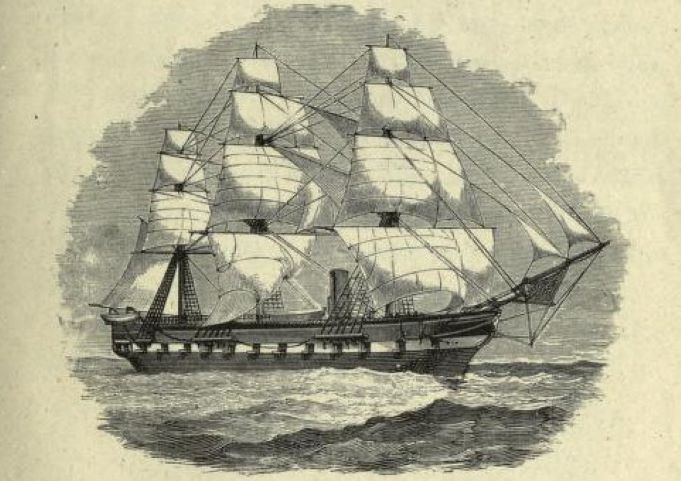
Launched on the Thames from London’s Woolwich Dockyard in February 1858, HMS Challenger was a full-rigged, steam-assisted, Pearl-class corvette with a speed of 10.7 knots or 19.8 km/h under steam. Of 1,465 tons burthen and with a length of 225 feet (68.66 m) it carried 18 guns, and in 1862 took part in operations against Mexico. The flagship of the Australian station between 1866 and 1870, it took part in punitive operations against Fijians on the Rewa River to avenge the murder of a missionary. As the Anglo-Maori Wars (1860-1872) continued, HMS Challenger made regular visits to show the flag at ports throughout New Zealand. When not on duty in Australian and Pacific waters the Challenger, (Commanders M’Guire, [Maguire or McGuire] and Rowley) was temporarily based in Auckland from where it patrolled the Bay of Plenty and East Coast during the anti-Hauhau campaigns.

HMS Challenger (1858-1878)
Campbell, Lord George, Log – Letters From “The Challenger”, McMillan, London, 1881: 6

HMS Challenger made several visits to Tauranga and, while brief, they were interesting nevertheless. The Evening Post of 17 December 1866, provided the following account of Governor George Grey’s visit to Tauranga on the Challenger, initially, to meet with Colonel Hamilton of the British 12th (East Suffolk) Regiment, which then had some 800 soldiers stationed in the district.

H.M.S. corvette Challenger, 18 guns, Commodore M'Guire, steamed into this port at an early hour on Monday, the 3rd instant, en route from Wellington to Kawau, with his Excellency the Governor on board. His Excellency, accompanied by Mr. Thatcher his private secretary, the Commodore, and two or three other gentlemen, came on shore about eleven a.m., and proceeded to Colonel Hamilton's residence. We understand that this visit had no absolute political significance, it being only of courtesy. However, the cognisant seem to be of opinion that from the lengthened korero of the leading [Maori] powers in the afternoon, something of importance was on the tapis [tapestry].

In the aftermath of the bloody Anglo-Maori clashes at Gate Pa and Te Ranga, and with some disaffected Tauranga Maori, joining the Hauhau in the Kaimai Ranges, for what was to become the 1867 Tauranga Bush Campaign, Grey was in no mood for niceties. The Evening Post added:

A somewhat amusing incident occurred as Sir George came on shore. A number of Maoris, evidently reckless as to results with regard to attire, and resplendent with gold chains, seals, opera glasses, &c. had congregated near our office to welcome, we suppose, Ta Kawana [The Governor], but on his proceeding straight on his line of march, they hailed him in a very undignified manner, calling loudly "haremai, haremai." To their utter discomforture, however, the illustrious stranger passed on, leaving the faithful Maori utterly crest fallen.

There is a moral to be pointed out by this apparent coldness. Did a long career of ingratitude and restless dissatisfaction amongst some of the natives even near here prompt such a recognition of his reception by them? Very possibly, we think.

The reaction of Tauranga Maori to this major breach of protocol by ‘Ta Kawana’ was not recorded, but the slight will have hardly endeared him to either loyalist or ‘rebel’ Maori in the region.

Governor Sir George Grey (1812-1898)
Detail of hand-coloured photographic portrait

Daniel Mundy, ‘George Grey’, C. 1860, G-625, Alexander Turnbull Library, Wellington.

Grey again visited Tauranga on the Challenger in January 1867, as the departure point for an arduous overland journey to Whanganui and by steamer to Wellington. Not without personal risk, given the number of Hauhau militant bands then active on the East Coast and in the Central North Island, the purpose of the undertaking was to obtain reassurances of loyalty from iwi at Rotorua, Taupo and Whanganui. The Press, 12 January 1867: 3, reported:

On Wednesday, the 19th, his Excellency left Tauranga accompanied by Commodore Maguire, Mr Thatcher, (Private Secretary), Mr Commissioner Clarke, Mr Mair, Mr Williams, of the Challenger, and Mr Monro, son of Sir David Monro, Speaker of the House of Representatives. Horses were provided for the party by the Natives at the pa opposite Te Papa [Otumoetai], and all started about the middle of the day for Maketu, where they arrived the same afternoon, and rested that night.

Tauranga township about 1864
Unidentified Photographer, ca. 1864, ½-022640, National Library of New Zealand, Wellington

HMS Challenger was last at anchor in Pilot Bay between late January to February 1870.  When Te Kooti’s Ringatu ‘rebels’ were reported to be within 10 miles of Tauranga, the outlying settlers crowded into the town which was ‘in a state of utmost confusion, settlers arming constantly and helpless women and children wanting shelter.’ From Wellington, the Challenger immediately started for Tauranga to join HMS Rosario and Blanche already present in the harbour. Te Kooti’s much anticipated raid, however, never eventuated. On the 28th February 1870 a Tauranga correspondent wrote to the New Zealand Herald describing how the Challenger and her crew had departed with some style, with local Maori protocol again disregarded.

        On Monday evening a dinner was given on board H.M.S. Rosario in honor of Commodore Lambert and the officers of the flagship, H.M.S. Challenger, the splendid band of the latter performing the whole evening, a treat to our little township we don't often enjoy. Yesterday, a 40-poundcr Armstrong gun was landed from the Challenger, and one of less calibre from the Rosario, with about 150 bluejackets, 60 marines, and 30 officers, the whole marching out on the Cameron-road, for the purpose of having a field day at the Gate Pah.

        On reaching the Gate, a change in the programme took place, and the men returned, after having enjoyed their dinner on the grass. The alacrity of the crews of these two vessels in landing their guns, re-shipping them, the orderly manner in which it was done, and the brief period it occupied, was truly astonishing, showing, as it does, the wonderful pitch of discipline and efficiency to which the British Navy has arrived. Your correspondent has been called upon by some chiefs since yesterday, who arc desirous of making some demonstration of welcome to the Komororore (Commodore), the highest officer of her Majesty's navy who has visited the harbour. Of course, they were referred elsewhere.

As Maori guerilla warfare escalated in the central North Island and Taranaki Governor Grey, with the support of his ministers, constantly avoided his instructions to finalise the withdrawal of Britain’s imperial regiments which had commenced in 1865. Unable to control so difficult a governor, the British government had little alternative but to terminate his appointment.in 1868.

In 1873, HMS Challenger was selected to undertake the first global marine research expedition. Embarking from Portsmouth on 21 December 1872, the vessel travelled 68,890 nautical miles or 125,936 km. Organized by the Royal Society in collaboration with the University of Edinburgh, the vessel carried 181 miles of hemp rope for sounding, trawling and dredging the ocean’s depths. While HMS Challenger was decommissioned in 1878 and sold for scrap in 1921, the Challenger Deep and the US space shuttle Challenger were later named after her.

Sources:

Belich, James, The New Zealand Wars and the Victorian Interpretation of Racial Conflict, Auckland University Press, Auckland, 1986.

Campbell, Lord George, Log – Letters From “The Challenger”, McMillan, London, 1881.

Evening Post, 17 December 1866: 2.

McGibbon, Ian, ed. The Oxford Companion to New Zealand Military History, Oxford University Press, Auckland, 2000.

New Zealand Herald, 28 February, 1870: 4.

Pearl-class corvette – Wikipedia https://en.wikipedia.org › wiki › Pearl-class corvette

Press, 12 January 1867: 3.

Sinclair, Keith, George Grey, 1812-1898, ‘Soldier, explorer, colonial governor, premier, scholar’, in The Dictionary of New Zealand Biography, Volume One 1769-1869, Bridgit Williams Books and Department of Internal Affairs, Wellington, 1990: 163.